
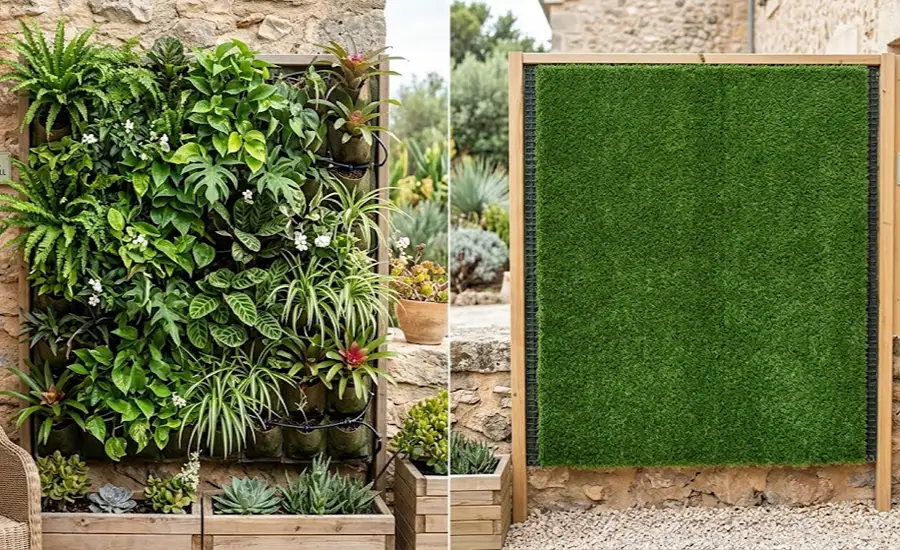


Green walls add colour, texture, and visual interest to indoor and outdoor spaces. They turn plain walls into decorative features and help create a fresh atmosphere in homes, offices, restaurants, and commercial properties.
However, not all green walls work in the same way. An artificial grass wall uses synthetic foliage to create a green appearance, while a natural green wall contains living plants that grow on a vertical structure.
Both options have advantages. Your choice depends on maintenance, lighting, water requirements, appearance, installation, and budget.
In this guide, we compare artificial grass walls and natural green walls to help you choose the right option for your property in Dubai.
What Is an Artificial Grass Wall?
An artificial grass wall uses synthetic grass, foliage, or decorative plant panels attached to a wall or supporting structure. The panels create a green backdrop without requiring living plants.
You will find different styles, including boxwood panels, fern designs, mixed foliage, ivy patterns, and decorative flower walls. Some designs have a uniform appearance, while others combine different leaf shapes and shades of green.
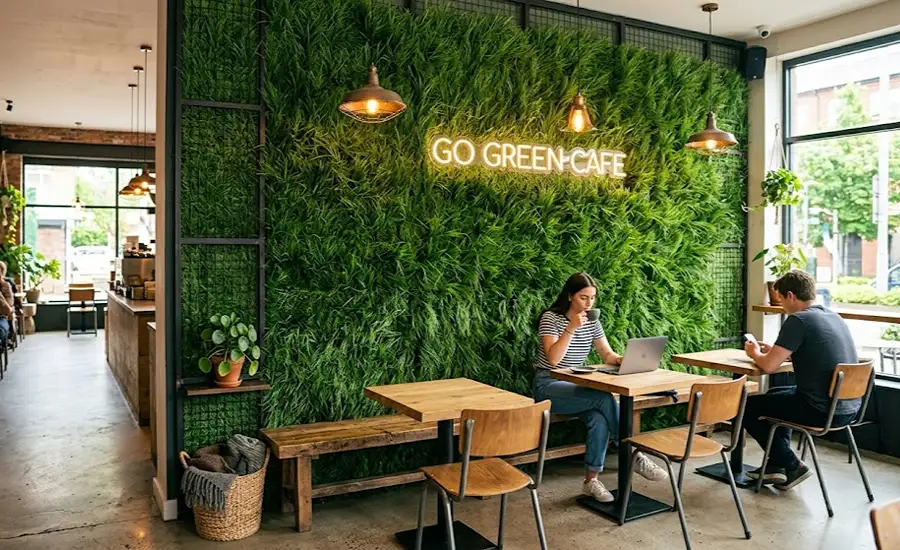
Artificial green walls suit living rooms, balconies, office receptions, restaurants, cafés, retail displays, and event backdrops. They also work well for branding features with logos, signage, and decorative lighting.
Explore the range of artificial grass wall panels in Dubai to compare foliage styles, panel sizes, and decorative designs.
What Is a Natural Green Wall?
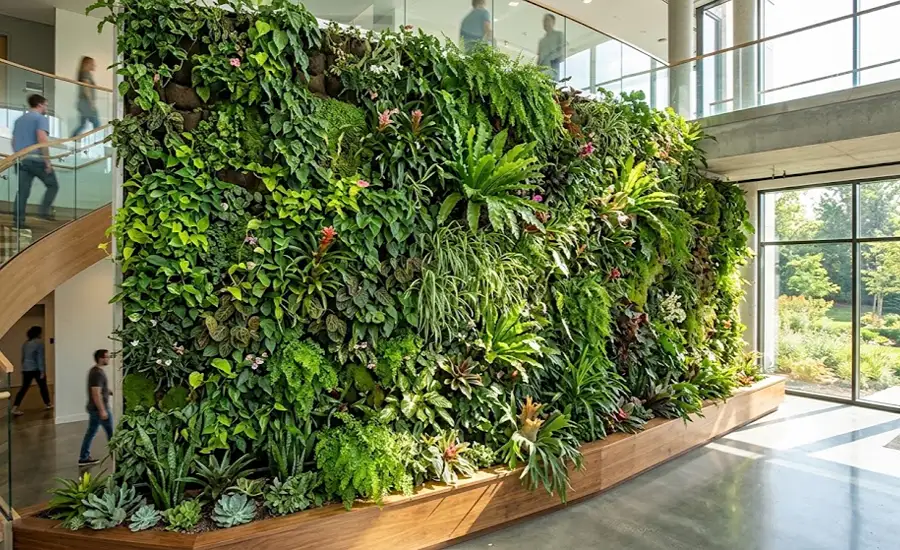
A natural green wall is a vertical planting system containing living plants. Plants grow in containers, pockets, modular trays, or other structures attached to a wall or freestanding frame.
Depending on the design, the system might use soil, another growing medium, irrigation lines, drainage components, and a frame to support the plants.
Natural green walls bring real foliage into indoor and outdoor environments. Some systems use climbing plants, while others feature a mixture of ferns, herbs, trailing plants, and other suitable species.
However, living plants need the right growing conditions. Light levels, water supply, humidity, temperature, drainage, and plant selection all affect their health.
Artificial Grass Wall vs Natural Green Wall: Key Differences
| Feature | Artificial Grass Wall | Natural Green Wall |
|---|---|---|
| Material | Synthetic grass or foliage | Living plants |
| Appearance | Consistent decorative greenery | Natural growth with changing foliage |
| Watering | Not required for plant growth | Required according to plant needs |
| Sunlight | Depends on product and exposure rating | Depends on plant species |
| Maintenance | Dusting and occasional cleaning | Watering, pruning, feeding, and plant care |
| Irrigation | Not required | Often required for larger systems |
| Growth | Foliage remains the same size and shape | Plants grow and need management |
| Pest management | No living plants to treat | Plant pests and diseases need attention |
| Installation | Panels fixed to a suitable surface or frame | Planting structure, growing medium, and often irrigation |
| Indoor use | Suitable for many decorative interiors | Requires suitable light and growing conditions |
| Outdoor use | Requires weather-appropriate materials | Requires suitable plants and growing conditions |
| Best suited for | Low-maintenance decorative walls | Living greenery and planted vertical gardens |
1. Appearance and Design Options
Artificial Grass Walls
Artificial green walls provide a consistent decorative appearance. You choose the foliage style, colour combination, panel size, and overall layout before installation.
For example, boxwood panels create a structured green surface, while mixed foliage designs add variation through different leaf shapes and textures. Flower panels introduce extra colour for decorative backdrops.
Artificial panels also suit spaces where you want a specific design to remain consistent over time.
The Bloom Artificial Green Wall is one option for feature walls, balconies, offices, and event backdrops. Its layered foliage design creates a decorative green finish without the upkeep of living plants.
Natural Green Walls
Natural green walls have a different appeal. Living plants develop new leaves, grow at different rates, and change with the seasons and growing conditions.
This variation creates a genuine planted appearance. It also means the wall needs regular care to maintain its intended shape and density.
If your priority is living foliage rather than a consistent decorative finish, a natural green wall is worth considering.
2. Maintenance Requirements
Maintenance is one of the main differences between artificial and natural green walls.
Artificial Grass Wall Maintenance
Artificial grass walls do not need watering, fertiliser, pruning, or plant replacement as part of normal plant care.
You still need to clean them. Indoor panels collect dust, while outdoor panels might accumulate sand, leaves, and other debris. Regular dusting, gentle brushing, or suitable rinsing helps keep the surface tidy.
You should also inspect the fixings occasionally, particularly on outdoor walls exposed to wind and weather.
Read the artificial grass maintenance guides for more practical advice on caring for synthetic greenery.
Natural Green Wall Maintenance
Natural green walls need regular attention to remain healthy. Depending on the plants and system, maintenance includes:
- Watering and checking irrigation systems
- Pruning overgrown stems and leaves
- Removing dead or damaged foliage
- Applying suitable fertiliser
- Checking for pests and plant diseases
- Monitoring drainage and growing conditions
- Replacing plants when necessary
The amount of work depends on the wall’s size, plant selection, location, and irrigation setup.
For busy homeowners and commercial property managers, an artificial green wall often offers a simpler maintenance routine.
3. Water and Irrigation
Artificial green walls do not require irrigation to keep their foliage alive because the foliage is synthetic. Water is only needed when cleaning the panels, where the product and installation allow it.
Natural green walls need water to support plant growth. Smaller installations might use manual watering, while larger systems often use an irrigation setup.
Poor irrigation design creates problems for natural walls. Too little water stresses the plants, while excessive water or inadequate drainage can damage surrounding surfaces.
If your property has limited access to water or you want to avoid managing an irrigation system, an artificial green wall is usually the more straightforward option.
4. Lighting and Location
Artificial Green Walls
Artificial foliage works in many spaces where living plants struggle to grow, including windowless corridors, shaded office receptions, and interior feature walls.
However, product selection still matters. Outdoor panels should have suitable UV resistance and weather protection for their intended exposure. Indoor products should also suit the installation environment.
For a balcony, terrace, garden wall, or commercial exterior, check the product specifications before choosing your panels.
Natural Green Walls
Living plants need appropriate light for healthy growth. Some species tolerate shade, while others require brighter conditions.
Indoor natural walls often need careful plant selection and, in some settings, supplementary lighting. Outdoor walls must account for direct sunlight, wind, heat, and the local climate.
In Dubai, prolonged heat and strong sunlight make plant selection and irrigation especially important for exposed walls.
If the wall receives little natural light or sits in a difficult growing environment, artificial foliage is often easier to manage.
5. Installation and Structural Requirements
Artificial green wall panels are generally simpler to install than a complete living wall system.
The installer measures the surface, prepares the mounting area, fits the panels, and checks the joints and edges. Depending on the wall and panel design, installation might use suitable fasteners, anchors, frames, or compatible adhesives.
The wall must support the chosen system, and outdoor installations need secure fixings suited to the conditions.
Natural green walls usually involve more components. The design might require a structural frame, plant containers, growing medium, irrigation, drainage, and access for future maintenance.
The wall and supporting structure must accommodate the weight of the system, including water and mature plant growth.
For decorative greenery without a complex planting system, artificial green wall installation in Dubai is an option to explore.
6. Cost and Long-Term Expenses
The initial cost of either green wall depends on the size, design, materials, and installation requirements.
Artificial green walls involve the cost of panels, mounting materials, and installation. After installation, ongoing expenses generally focus on cleaning and occasional repairs or replacement of damaged panels.
Natural green walls might involve higher system requirements, particularly when they need irrigation, drainage, specialised frames, and professional planting. They also involve recurring expenses for water, fertiliser, pruning, plant replacement, and maintenance.
A smaller natural installation might be affordable to maintain, while a large or complex living wall needs more planning.
Compare the full installation and maintenance costs rather than looking only at the initial price.
7. Environmental Considerations
Natural green walls contain living plants and growing media. Plants absorb carbon dioxide as they grow and support local biodiversity when suitable species and conditions are used. Their benefits depend on the design, plant health, location, and maintenance.
Artificial green walls provide decorative greenery without irrigation or plant-care products. However, their synthetic materials require resources to manufacture, and the panels eventually need replacement or disposal.
The better environmental choice depends on the materials, lifespan, water use, maintenance requirements, and disposal options of the specific system.
If supporting living vegetation and biodiversity is your priority, a natural green wall offers benefits synthetic foliage does not. If your priority is decorative greenery with minimal ongoing water use, an artificial wall might be more suitable.
8. Which Green Wall Is Better for Dubai?
Dubai properties need green wall designs suited to local heat, sunlight, and indoor conditions.
Artificial green walls are useful for balconies, shaded areas, office receptions, restaurants, retail interiors, and decorative exterior features. UV-resistant panels designed for outdoor use help reduce fading under sunlight.
Natural green walls are suitable when you want living plants and have the resources to support them. The design needs appropriate plant species, water management, drainage, and maintenance.
For residential properties, artificial foliage often suits balconies and feature walls where the goal is a neat green appearance without regular plant care.
For hospitality venues and commercial interiors, either option works depending on the design objective. Artificial panels suit branded backdrops and consistent decorative walls. Natural planting suits projects where living vegetation is an important part of the design.
Artificial Grass Wall vs Natural Green Wall: Which Should You Choose?
Choose an artificial grass wall if you want:
- A consistent green appearance
- Minimal routine maintenance
- No plant watering or pruning
- Decorative greenery in low-light spaces
- A feature wall for a balcony, office, café, or reception
- Flexible foliage designs and panel layouts
Choose a natural green wall if you want:
- Living plants and natural growth
- A planted feature that changes over time
- The environmental benefits associated with suitable living vegetation
- A vertical garden with carefully selected plant species
- A system you are prepared to water, monitor, and maintain
Neither option suits every project. Consider the location, available light, installation budget, maintenance capacity, and intended appearance before making a decision.
Final Verdict
Artificial grass walls and natural green walls both add greenery to indoor and outdoor spaces, but they serve different purposes.
Artificial green walls provide a consistent decorative finish with little routine upkeep. They work well for homes, offices, balconies, restaurants, and commercial feature walls where simple maintenance is important.
Natural green walls bring living vegetation into a space. They need suitable light, water, drainage, and regular plant care, but they offer the benefits and changing appearance of real plants.
If you want a decorative green wall without ongoing plant maintenance, explore the artificial green wall collection at Artificial Grass Shop. Compare the available foliage styles and choose panels suited to your indoor or outdoor setting.